



Service Learning
Program Overview
- Start Location : Siem Reap
- Tour Type Duration : 6 Days / 5 Nights
- Tour Location : Siem Reap
- Active Level : Moderate (walking, cycling, and light trekking)
- Group Size : Minimum 5 - Maximum 15
Program Highlights & Student Outcomes
What Students Will Do
- Participate in community-based service projects supporting inclusion and accessibility
- Engage in traditional Cambodian cooking, crafts, and cultural exchange
- Support wildlife care and environmental conservation initiatives
- Explore Cambodia’s landscapes through cycling, hiking, and cultural immersion
- Visit Angkor Wat, Bayon, and Ta Prohm as spaces for reflection and legacy
- Practice mindfulness through journaling, gratitude circles, and guided dialogue
- Collaborate with peers through teamwork, shared meals, and daily reflection
What Students Will Gain
- A deeper sense of empathy and compassion through meaningful service
- Increased self-awareness and emotional resilience through mindful reflection
- Greater intercultural understanding and respect for Cambodian perspectives
- Practical experience in ethical service learning and responsible global engagement
- Stronger leadership, teamwork, and communication skills
- Appreciation of environmental stewardship and human–nature connection
- Confidence to listen deeply, reflect critically, and act with intention
Itenerary
Arrival & Welcome: Introduction to Cambodia
Focus: Orientation, grounding, and presence. The journey begins by creating a safe and intentional learning environment where students can arrive fully — not only physically but mentally and emotionally. Through orientation and shared reflection, students are invited to slow down, connect with one another, and begin understanding Cambodia’s cultural context as the foundation for meaningful service.
Students Will Do
- Settle into accommodation and attend program orientation
- Learn about Cambodian history, culture, and program values
- Participate in a sunset reflection at West Baray focused on gratitude and presence
- Share a welcome dinner and begin building group connection
Students Will Gain
- A sense of grounding and psychological safety
- Cultural context for the days ahead
- Openness to reflection and shared learning
Service for Community: Giving Through Action
Focus: Compassion, generosity, and inclusion. Students explore service as a relationship built on humility and mutual respect rather than charity. Through hands-on collaboration and cultural exchange, they experience how meaningful service begins with listening, understanding, and recognizing shared humanity.
Students Will Do
- Take part in a traditional Cambodian cooking activity
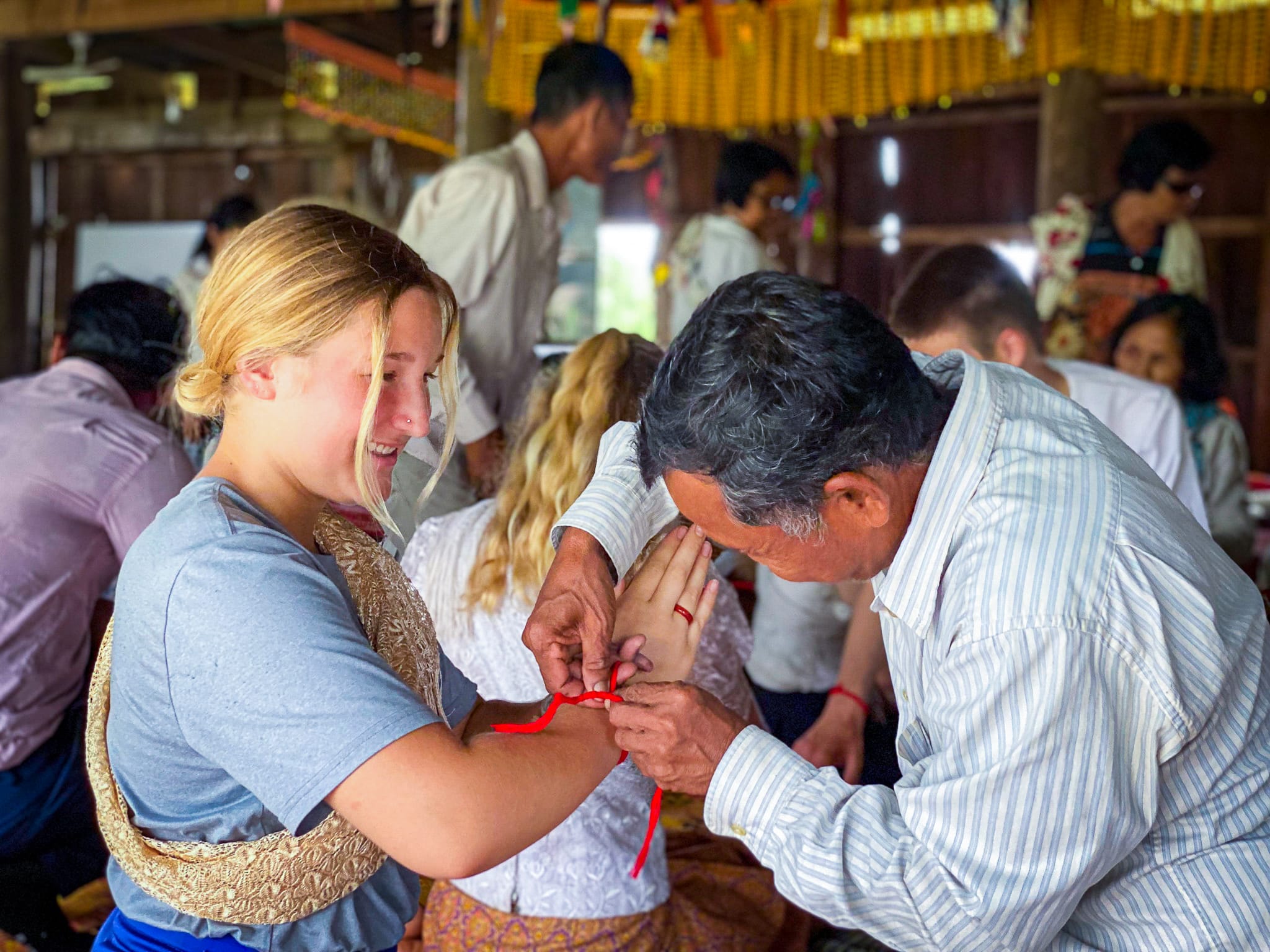
- Prepare offerings and participate in a water blessing with local monks
- Join a wheelchair-building service project supporting accessibility
- Engage in guided group reflection and journaling
Students Will Gain
- Understanding of service rooted in dignity and empathy
- Awareness of accessibility and social inclusion
- Insight into how collective effort creates positive impact
- Greater appreciation for community collaboration
Service for Nature: Learning from the Natural World
Focus: Environmental stewardship and interconnectedness. Nature becomes a teacher as students explore biodiversity, conservation, and the delicate balance between human activity and ecological health. The day encourages reflection on personal responsibility toward protecting natural systems.
Students Will Do
- Visit the Angkor Centre for Conservation of Biodiversity (ACCB)
- Support wildlife care and conservation activities
- Hike to Kbal Spean waterfall and natural landscapes
- Participate in quiet reflection and group dialogue
Students Will Gain
- Deeper understanding of conservation and ethical tourism
- Appreciation for biodiversity and environmental responsibility
- Perspective on the connection between communities and ecosystems
- Reflection on humanity’s role in caring for nature
Service for Self: Creativity, Culture & Mindfulness
Focus: Self-awareness, creativity, and cultural immersion. Students explore how personal growth supports meaningful service through creative expression, mindful movement, and cultural engagement. The day emphasizes balance — recognizing that service also requires reflection, rest, and inner awareness.
Students Will Do
- Join a countryside village cycling tour
- Participate in a pottery or creative arts workshop
- Visit a social enterprise café and meet local changemakers
- Take part in a Cambodian cooking class
- Engage in guided reflection and journaling
- Optional visit to the Made in Cambodia Market
Students Will Gain
- Increased self-awareness and emotional balance
- Appreciation for local creativity and craftsmanship
- Understanding of social enterprise as community impact
- Confidence in personal expression and mindful reflection
Legacy Day: Reflection Among the Temples
Focus: Legacy, gratitude, and integration. Among Cambodia’s sacred temple landscapes, students reflect on impermanence, continuity, and the impact they wish to leave behind. This day invites students to connect personal values with broader global responsibility and celebrate the shared journey.
Students Will Do
- Experience sunrise reflection at Angkor Wat
- Explore Bayon and Ta Prohm with cultural interpretation
- Participate in a closing ceremony and appreciation circle
- Share insights during a farewell dinner
Students Will Gain
- A deeper sense of personal and collective legacy
- Emotional closure and integration of learning
- Stronger peer relationships and shared meaning
- Clarity on values and intentions moving forward
Departure: Carrying Lessons Forward
Focus: Transition, application, and continued growth. Departure is framed not as an ending but as the beginning of applying lessons learned. Students reflect on how compassion, mindfulness, and responsible action can continue shaping their choices beyond Cambodia.
Students Will Do
- Join a final gratitude and reflection circle
- Share commitments for future action
- Transfer to Siem Reap International Airport for departure
Students Will Gain
- Clarity on applying learning beyond the program
- Confidence to lead with empathy and awareness
- A lasting sense of purpose and responsibility
Frequently Asked Questions
What is Phum Journeys?
Phum Journeys is an educational travel organization based in Cambodia that designs immersive, curriculum-aligned learning journeys for schools and institutions. Our programs combine service learning, cultural immersion, outdoor education, and reflective practiceguided by local expertise and long-term community partnerships.
Who are Phum Journeys programs designed for?
Our programs are designed primarily for middle school, high school, gap-year, and university-level students, as well as educators and institutions seeking meaningful experiential learning. Each journey is adapted to the age, learning goals, and needs of the group.
Are programs customized for each school?
Yes. All programs are co-created with schools and educators. We align learning objectives with curriculum frameworks, student profiles, duration, and risk considerations. No program is pre-packaged—each journey is designed intentionally to meet academic and pastoral goals.
How are service learning projects chosen?
Service learning initiatives are identified by local communities themselves. Students collaborate with long-term community partners on locally led projects, ensuring dignity, reciprocity, and sustainability. The focus is on learning with communities, not “helping” from the outside.
How do you ensure programs are ethical and responsible?
Ethics guide every aspect of our work. We prioritize safeguarding, informed consent, cultural respect, and critical reflection on power, privilege, and impact. Students are prepared before engagement and supported through guided reflection throughout the journey.
How do you keep students safe?
Student safety is our top priority. We operate robust safeguarding, risk management, and emergency response frameworks. Programs are led by experienced facilitators and local guides, with clear protocols, appropriate supervision, and ongoing risk assessments.
Who leads the programs?
Programs are led by experienced local facilitators, educators, and guides who bring deep cultural knowledge, facilitation skills, and lived experience. Many programs are personally guided by the founder, ensuring consistency, care, and strong educational leadership.
How are programs academically defensible?
Our programs support experiential learning, reflective practice, and inquiry-based education. They align well with IB Approaches to Learning, service-learning standards, and the UN Sustainable Development Goals, and include structured reflection, discussion, and assessment opportunities.
What makes Phum Journeys different from traditional school trips?
Phum Journeys emphasizes depth over sightseeing. Students slow down, build relationships, engage critically with history and culture, and reflect on their role in global communities. Learning is relational, embodied, and grounded in lived experience—not tourism.
Will students learn about Cambodia’s history and contemporary realities?
Yes. We approach Cambodia’s history with honesty and care, exploring themes of memory, resilience, conflict, and healing. Students also engage with contemporary social, cultural, and environmental realities through dialogue and lived experience.
Do students need prior experience with service learning or travel?
No prior experience is required. Programs are designed to support students at different stages of learning and travel experience. Preparation, orientation, and ongoing facilitation ensure students feel supported and confident.
How does reflection fit into the program?
Reflection is central to every journey. Through guided discussions, journaling, mindfulness practices, and group dialogue, students connect experience with meaning—linking inner growth to ethical action and responsibility.
How large are the groups?
We work with small groups to ensure safety, quality facilitation, and meaningful connection. Group size is discussed during program design and depends on learning goals, activities, and risk considerations.
How are parents kept informed?
Schools receive clear program outlines, safety information, and learning objectives to share with families. We prioritize transparency and work closely with educators to ensure parents feel confident and informed.
What do students gain from a Phum Journeys experience?
Students consistently report increased empathy, resilience, cultural humility, and self-awareness. Many describe the experience as transformative—shaping how they think about leadership, responsibility, and their place in the world long after the journey ends.